High Grade Gold Mining Claims Properties For Sale
Basic questions & answers about unpatented mining claims.
What are mining claims?
The General Mining Act of 1872 is a United States federal law that authorizes and governs prospecting and mining for economic minerals, such as gold and silver, on publicly owned lands. This law, approved on May 10th, 1872, codified the informal system of acquiring and protecting mining claims on public land, formed by prospectors in California and Nevada from the late 1840's through the 1860's, such as during the California Gold Rush.
A mining claim is the right to explore for and extract minerals from a tract of land. The mining law of 1866 gave discoverers rights to stake mining claims to extract gold, silver, cinnabar (the principal ore of mercury) and copper. When Congress passed the General Mining Act of 1872, the wording was changed to "or other valuable deposits," giving greater scope to the law. The mining law opens up land in the public domain, that is, federal land which has never been set aside for a specific use. All mining claims are initially unpatented claims, which give the right only for those activities necessary to exploration and mining.
The original mining law gave miners the opportunity to obtain patents (deeds from the government), much as farmers could obtain title under the Homestead Act. A patented mining claim is one for which the Federal Government has passed its title to the claimant, making it private land. A mineral patent gives the owner exclusive title to the locatable minerals. It also gives the owner title to the surface and other resources. This means: You own the land as well as the minerals.
The process of patenting claims has been perhaps the most controversial part of the mining law.
What is an unpatented mining claim?
In 1872, The United States Government granted any citizen the right to explore, locate and claim certain rights upon public lands. An unpatented mining claim is a particular parcel of federal land, valuable for a specific mineral deposit or deposits. It is a parcel for which an individual has asserted a right of possession. The right is restricted to the extraction and development of a mineral deposit. This means: you are leasing, from the government, the right to extract minerals. No land ownership is conveyed.
Can I convert my unpatented property to patented property?
Since 1995, Congress has enacted one-year moratoriums on the issuance of patents, whereby new mining patents generally will not be issued - however, this is subject to change in the future.
Does the land belong to me?
You own the mineral rights only, until a patent can be secured from the government. Presently, there is a moratorium on issuance of patents, however, this is subject to change in the future. You may use as much of the surface as reasonably necessary for mining your property. You may recreate in your spare time on your unpatented mining claim.
Can I live on it?
Building a structure on your mining claim simply for recreation or purposes other than mining, is illegal. All buildings, equipment, fences, signs, roads, any man made changes on the mining claim, must be reasonably incident to mining. To build on a gold mining claim, you must first obtain a permit from the federal agency managing the surface, for example, the USFS or BLM.
What if I find silver on my mining claim, or platinum or diamonds? Does whatever I find on my property belong to me?
You own all the mineral rights to your mining claim and are not required to pay a royalty to anyone for extracting such minerals.
What if I find others camping, fishing, hunting, hiking, etc. on my claim?
Others may recreate on an unpatented mining claim ..ie; fishing, swimming, hiking... however; you have the right to post mining claim signs warning the public of possible hazards and dangerous conditions pertaining to your mining procedures. You may also post "No Trespassing of Mineral Rights". In most instances, the public will respect your rights and signs that help to convey your rights.
I live a thousand miles away from my mining property! How do I know others won't take my gold?
There is certainly the possibility that someone will blatantly disregard federal mining claim signs and shake a few pans on your property. However, the reality of anyone taking any real values are minimal at best. It simply is not worth worrying about since most values will require significant equipment and time to recover any gold in quantities. Anyone who would try to set up a serious operation on another claim owners property would have to be just plain ignorant, blind, or unbelievably bold, as this is a federal offense and can mean prison time for the trespasser. Most of the mining claims in the Salmon River area are easily monitored via local and other means.
The simple truth is this: The gold on most any gold mining claim is much safer locked up right there in the river bank than in any conventional bank. The gold in these old river channels has been locked up for thousands of years and most all of it is still right where it was deposited in the first place...Can't say that about many savings and loans institutions!
With so many mining claims on the market today, how do I make the wisest decision for buying a valid high-quality gold property?
As you look around at the many different "mining claims" being offered today, aside from the seller guaranteeing that the title is free of any encumbrances, a major concern should be whether or not the property actually contains paying quantities of whatever valuable minerals being touted. Common sense dictates that no-one in their right mind would sell a property to you for a few thousand dollars, that had been tested and known to have exceedingly rich material.
Ask the seller to show you their own recovered values. Ask them how many days / months / years the property has been tested, and what their average values have been. Don't let them merely show you a little bit of gold in a vial and baffle you with alot of seemingly reputable talk while expounding on their purported profound credentials and those of the mining claim and its surrounding area. You should be allowed to sample and find gold on the property too. A revealing way to sample any property is to dig up some material from a few logical gold traps and pan that material down. In the end, you should come up with good gold in your pan.
If the seller can't show you their own recovered values, or speak of past production averages, and/or if you can't find any valuable minerals either, you might want to walk away from the sale.
What to look for if you're thinking of buying a mining claim
Unscrupulous sellers will try to sell you unpatented property they don't even own
At the time of locating; claimants of unpatented property need to file their notice with the county and with the BLM..
1) Any unpatented placer gold mining claim - recorded with the appropriate county recorder - will have an "instrument number". It is a number that the county recorder stamps on the original Location Notice at the time of recording.
2) Any unpatented placer gold mining claim recorded with the appropriate state office of the BLM will have a BLM mining claim (MC) "serial number". For instance, CAMC for California, ORMC for Oregon, etc..
Ask for both. Any legitimate owner - should be able to provide you with both. They should be able to provide you with the BLM telephone number so you can verify the information, too. If they can't (or won't) - Beware.
Overfilings; Always check the BLM files before buying a claim to determine whether or not it conflicts with another senior pre-existing claim
Just about anyone can file a location notice with the county and BLM, and that “claimant” will receive an instrument number and serial number - However - it does not mean that the filing is valid. Novices &/or unscrupulous sellers can "overfile" any mineral property where a senior property owner has clearly established previous ownership, and then offer that "overfiling" for sale to the public (who typically has no idea of the conflict involved). Always check the BLM files before buying a claim, to see if it conflicts with any other senior valid pre-existing property (owner).
Often placer gold mining claims are staked by the inexperienced
doing so with nothing more than National Forest and/or a topographic map - in hand. Novices often make the mistaken assumption that simply because land is situated within a National Forest, that it is open to mineral entry. National Forest maps depict lands under the jurisdiction of the USFS. They do not depict many types of various reservations, proposed withdrawals, existing withdrawals, proposed land exchanges, lands conveyed back to the USFS - without mineral rights, municipal watersheds, or any other lands - not open to mineral entry. A BLM MTP shows all lands withdrawn from - or open to mineral entry. An MTP is the official federal record of land status. It will stand up in court as fact, as nothing else will.
How a placer gold mining claim is described, is critical. if it is described incorrectly, it may be a fatal defect
With rare exception, all placer gold mining claims on surveyed lands must be described by aliquot part legal description.
On unsurveyed lands, gold mining claims must be described by a metes and bounds description.
On surveyed lands, a rare exception that may justify a metes & bounds description is certain types of placer gold deposits (radically meandering bench & gulch deposits), that are not practical to locate by aliquot part legal description, because in doing so, it would force the claimant to include excessive non-mineral land, as each 10-acre aliquot part of a placer gold mining claim must be mineral-in-character, in order to be valid.
Novices often have neither the expertise to correctly survey and measure a true metes and bounds described mining claim, nor actually do so, by placing any, or every corner in its correct position in mountainous terrain.
Metes and bounds means a method of describing a parcel of land that does not conform to the rectangular U.S. Public Land Survey System, using compass bearings and distances from a known point to a specified point on the parcel and then by using a continuous and sequential set of compass bearings and distances beginning at the point of beginning, continuing along and between the corners or boundary markers of the parcel's outer perimeter, until returning to the point of beginning.
The most common blunder novice mining claim locators make, when attempting to utilize a metes and bounds description is this; Suppose a placer gold bearing small river channel meanders northerly in a 180 degree horse shoe shaped curve, over a half mile distance. The novice then describes the gold mining claim - supposedly - covering that whole gold bearing river channel gravel deposit as; Beginning at post #1, thence 400 feet southerly across the river to Post #2, thence following the curve of the river - 2640 feet to Post #3, thence 400 northerly across the river to Post #4, thence following the curve of the river 2640 feet back to Post #1, the place of beginning.
Bear in mind that, a legitimate "compass bearing" is by three hundred sixty (360) "degree's" (azimuth), normally split into ninety (90) degree quadrants (90° from north to east, 90° from east to south, 90° from south to west, and 90° from west back to north. Today, azimuths are often stated in terms of 360°, the full circle of the compass rather than quadrants. A modern statement of the azimuth of "S 70° W" would be 250°; degrees are always counted in a clockwise direction from compass north.
To the experienced eye, the obvious defects are that "southerly - northerly" are not actual compass bearings. Nor is "following the curve of the river - 2640 feet", a continuous and sequential set of compass bearings and distances. Moreover, because the existing posts define the lands inside the claims boundaries, one need only draw straight lines between all 4 posts (described above), and you will instantly see, 90+ % of the river channel is not between them.
Beware of placer gold mining claims supposedly described by metes and bounds descriptions, or any that are described as odd shapes (snow flake, horse shoe or triangular shaped, for instance)
The size of a placer gold mining claim is important. It will also clearly demonstrate the expertise of the locator. Each 10-acre aliquot part of a placer claim must be mineral-in-character. Mineral-in-character means land that is known, or can reasonably be inferred from the available geologic evidence, to contain valuable minerals subject to location under the general mining law for purpose of locating a placer gold mining claim.
For instance, large placer gold mining claims (160 acres, for example) that a topographic map, photographs or on-site inspection clearly shows contains only 40 acres of placer gold bearing stream, or river channel, should only be a 40 acre placer gold mining claim. Because the excess ground is not placer type mineral-in-character. Don't let anyone try to convince you that the mining claim(s) large size makes it more valuable, when in fact - it is NOT. If the bulk of the property is not mineral-in-character, the non-mineral excess land adds no value to a placer gold mining claim, and could one day subject the owner to a "validity contest", by the BLM, or USFS.
High quality accurate USGS topographic type maps of the mining claim are important
Obviously, one can assume that a locator, or seller of a placer gold mining claim, who cannot accurately depict, draft, or map the precise boundaries of a placer gold mining claim, is a novice. Accurate mapping will also graphically display if the gold mining claim is properly described, by simple - quick compression of the properties legal description, to the map of the mining claims boundaries. The quality of the map(s) depicting the gold mining claim, reflect directly on the quality of the claims' title.
The factual placer gold production history of the specific area where the placer gold mining claim is situated, as well as the source(s) of the gold, and gold mining methods historically used to recover it, is important
Truly, gold is where you find it. However, normally placer gold mining claims situated far from known sources of gold, without any historically documented history of placer gold production, lessen the chance that economic deposits of placer gold will be found, or exist there. Novices, or unscrupulous people may stake placer gold mining claims that are nothing more than "goat pasture".
For a placer gold mining claim to be valid, perfecting, and vesting the owners valid existing private property rights, it must contain a valid mineral discovery. If it does not, should the validity of the mining claim ever be contested by the agency (BLM -or- USFS) having administrative jurisdiction over the land, generally they will have little or no difficulty in quickly determining that the mining claim contains no valid mineral discovery, and consequently declare it void.
Visible geologic evidence of a "placer" type deposit is important
Generally, the bulk of placer gold deposits are contained in alluvial gravel's (tertiary, bench, gulch, bar, stream or river bed deposits). If the gold mining claim you are thinking of purchasing doesn't have this geologic evidence, beware.
If you are unable to physically inspect the particular placer gold mining claim, prior to it's sale, detailed photographs of it are important
Obviously, photographs of the gold mining claim depict what is there. Photo's of the gold mining claim should depict the quality of road access, campsites, streams, rivers, gravel deposits, bedrock exposures and general topography of the mining claim. The availability, and quality of those photographs graphically demonstrates the quality of the property.
The availability of adequate sources of water is extremely important
Few realize, no dry washing plant has ever been invented, nor exists that will economically or effectively process large volumes of gold bearing sand, or gravel.
As an example, a relatively good placer (pay streak) would contain at least $25+ per yard in recoverable gold. On a mining claim without water, a little back pack dry washer will process about five -5 gallon buckets full in a shift. A 5 gallon bucket contains about 1.5 cubic feet of material. A yard contains 27 cubic feet of material. You do the math.
To impress that point upon you, Nevada is this countries largest lode type gold producer. Gold placer deposits exist near almost all lode gold mining districts in Nevada. Nevada's history of placer gold production is extremely meager in comparison to other states - where water is available, or plentiful.
Without a close adequate source, or existing on site supply of water, mining placer deposits is not generally economically feasible. Gold rush and depression era placer gold miners were smart. Common sense dictates they would mine out every single economic placer gold deposit they found, if it was within their means. Without water, they could not economically mine literally thousands of placer gold deposits, known to exist in arid, or desert-like states, where adequate water is not readily available.
Beware of those who primarily focus on the recreational attributes of a placer gold mining claim
You can "recreate" on most BLM lands and in any National Forest - for free - except in fee camp grounds. There is no such thing as a "recreational" unpatented placer gold mining claim. It is either "valid", or not. In order for it to be "valid" it must be properly staked, filed, contain a "valid mineral discovery" and be properly maintained. Recreational attributes do not establish the gold mining claims good title or validity.
Physical characteristics to look for on a gold mining claim.
Where is the Gold?
Gold can be found in many areas. Streams are commonly associated with the finding of gold. This gold is known as placer gold. This means that the gold has been weathered away from its source, literally, the mother of the smaller fragments. It is the finding of placer gold that can create a trail to the mother lode or source.
Where should I look for gold on my mining claim?
- Look for gold where it has been found before. Doing research in off-peak season times is an excellent way to increase the odds of finding gold.
- Look for gold on the high benches. As a stream cuts deeper into a canyon, it can leave patches of gravel high upon the canyon wall. These are called benches. Look for round or rounded rocks well above the present high water level. Round or rounded rocks have lived in a river at some time in their lives.
- Look for gold wherever there are outcrops of rock / quartz.
- Look for gold wherever there is a gulch or any water that is cutting through the land. These water sources are known to cut through orebodies / unearth, and carry lots of gold.
- Along the rivers and first benches, look for signs for "bagging and tagging" up to the source. more regarding pocket gold.
- Gravel bars, (usually found on the inside of the river bends). Although the gold here is typically mostly small flakes to very fine, nice sized nuggets can get lodged in these low-pressure areas, as well.
- In the river / along river banks, gold will concentrate in areas where the water pressure decreases. Gold moves when the water pressure is high. Therefore, imagine what the water flow would look like at flood stage, then look for areas where the water pressure would decrease. Typical areas would be around large boulders, on the insides of curves, along the banks, etc..
- Look for gold in small streaks of gravel laying on bedrock. Pot holes or cracks in the bedrock. Look for lines of moss running along the bedrock, too. There is almost always a small crack under the moss and these cracks can contain a surprising amount of gold.
- Around large boulders and other obstacles. This is where gold will get trapped and is a good spot to dig for color.
- Where the stream levels out after a steeper section in the river, such as the area downstream of rapids or waterfalls.
- Look for areas where bedrock is shallow, and look for areas that will trap gold; cracks, rough or broken bedrock, and large boulders. Always look for places that would have decreased water pressure at flood stage.
Which Streams contain gold?
Generally speaking, streams that are most likely to contain gold must have four characteristics;
1. They should be unregulated (not dammed).
2. They should be in a mineral rich area
3. They should fall through enough elevation to cause
sufficient churning in the spring flood
4. Stream path and rock formations facilitate the deposition of the dense materials (gold, platinum, lead, iron, etc.)
What is bedrock? and why does there always seem to be a relationship (to it), with finding gold?
Bedrock is the general term for consolidated (solid) rock that underlies soils or other unconsolidated material or... the solid rock that underlies all soil, sand, clay, gravel and loose material on the earth's surface.
Gold is extremely heavy, six or seven times heavier than rock, and, therefore, it settles down, on the bottom. The key word here is down. Gold's excessive weight forces it down-downhill, downstream, down into the sands and gravel, down into bedrock cracks and crevices, and down in your sluice box or gold pan. Gold is assisted in its downward movement by wind, rain, earth tremor, rockslide and agitation. Once gold settles on the creek bed, it will sift downward through the lighter sand and gravel. Because of its weight, it will continue to sink until it reaches bedrock, where it will become trapped in crevices and holes. Any exposed bedrock, no matter how high up, or how deep in the river, is always a good prospect for finding placer gold.
Ancient streambeds / river channels...
The Ancient Rivers of Gold in northern California are from the Tertiary Period. The Tertiary rivers existed millions of years ago and many of them had large quantities of gold within their gravels. For this reason, they are known as the "Ancient Rivers of Gold."
Over the tens of thousands of years that lodes were being broken up and deposited in streams, the entire topography of the surrounding area was changing. Massive landslides and titanic upheavals frequently dammed up rivers and streams, forcing the water to find alternate routes. When this happened, the former streambeds were left high and dry, and these often contained much-concentrated gold.
Geologists have argued that most of the gold in today's river systems is not gold that has eroded more recently from lode deposits, but gold that was eroded out of the old ancient riverbeds where they have been crossed by the present river systems. The ancient channels, where they have been discovered and mined, have often proven to be extremely rich in gold deposits. In fact, many of the richest bonanzas that have been found in today's river systems have been discovered directly downstream from where they have crossed the rich ancient streambed gravels. So always be on the lookout for signs of an ancient or dried-up streambed, as it could produce gold beyond your wildest dreams. In fact, if a major new placer discovery were to be found today, it undoubtedly would occur in an ancient riverbed.
What a "valid" placer gold mining claim is;
A professional explanation in simple terms.This information concerns unpatented placer gold mining claims (only).
The largest initial possibility for gross misunderstanding is that a potential unpatented mining claim buyer thinks that the land, timber, and whatever else the property contains is being sold, along with the full bundle of private property rights normally associated with most other types of real estate. Do not buy an unpatented placer mining claim - if you think, or are being led to believe, you are buying fee simple private property, with the right to build a vacation cabin, home, lodge, ranch, or farm on (it), because it's just not true.
The second largest potential for gross misunderstanding about unpatented placer gold mining claims, is what makes one valid. A placer mining gold claim, as a matter of public record can be located, recorded & fully maintained, yet be invalid. Mining claim invalidity can occur by any number of means, an inexperienced person would not see, nor even know.
The purpose of U.S. Mining law is to allow a claimant who has discovered an applicable mineral, on lands open to mineral entry, to acquire, mine & patent it. The initial key factor being - that a discovery of valuable mineral deposit exists within the claim. Because, if one does not, the mining claim is invalid. On a placer gold claim, at the very least the locator must show a discovery of gold, that is worth the effort to develop and mine, by any permissible means, to eventually produce a profit. That is called "The prudent man test". Meaning a "prudent man" would not invest his time, labor, or capital attempting to develop a mineral deposit that could never be profitable.
The next test is called a "marketability test". Meaning, if you do produce a mineral, is there a market and can the mineral be sold at a profit? Obviously, if one can produce an ounce of gold, below market price, a profit potential exists. Assuming all else is in proper order, if a placer mining gold claim can pass a "Prudent Man" and "Marketability" Test, the placer gold claim contains a "valid mineral discovery", meaning - on it's face, it is valid.
A valid unpatented placer mining gold claim is both real estate and private property, with Constitutionally protected title and rights conveyed by recorded deed. Ownership does not carry the full bundle of rights generally associated with most other real estate. However, it carries a good part of that private property "bundle of rights", if in fact, the unpatented placer mining claim is valid.
In law, the word "claim" in connection with the phrase "mining claim", with properly maintained title represents a recognized right in real property, in both state and federal courts. The Supreme Court has established that a mining "claim" is not a claim in the ordinary sense of the word--a mere assertion of a right--but rather is a private property interest, which is itself real property in every sense, and not merely an assertion of a right to property.
A valid unpatented mining claim is a tract of public domain land (unappropriated, unreserved & not segregated or withdrawn for other purposes), of a certain size that is open to mineral entry (under Federal mining laws and applicable State law), on which a discovery of an appropriate valuable mineral has been made, (usually placer gold in alluvial gravel), on which a person, or persons have filed and maintain a mining claim and own certain private property rights (to it).
A placer gold claim may only be located over river sands or gravel's bearing gold or valuable minerals hosted in soils, alluvium (deposited by water), eluvium (deposited by wind), colluvium (deposited by gravity), talus, or other rock not in its original place.
The locator, sometimes called a claimant, (who must be a U.S. citizen, or person sworn to become one, in order to initiate one) monuments (stakes) the property, files (for a fee) a location notice containing the claim name, acreage, legal description, location date & claimant(s) of the property with the applicable county recorder (to comply with state law), then (for a fee) records a copy of that location notice, along with a map with the appropriate BLM State Office (to comply with Federal Law).
The area within a placer claim must be described in the location notice in one of two ways; Either by the aliquot part legal description, or by a metes & bounds description. In either case, it is mandatory that the tract of land described, be as compact in form, and conform as near as practical to the rectangular system of U. S. land surveys.
Placer claims range in size from under 20 to a maximum of 160 acres. The law provides that a single person (locator) may claim up to 20 acres, two locators in association with one another may claim up to 40 acres, so on and so forth up to 8 locators claiming a maximum of 160 acres.
Generally, with most association type placer claims, one locator acts as the "agent" for the remainder of the locators. An association type placer claim, regardless of size, is a single claim.
Only one "discovery" of a valuable mineral is required within the boundaries of any size placer claim, so long as the remainder of the land within it is "mineral in character". No private property rights "vest" in the claimant(s), if a claim does not contain a valid mineral discovery.
Once the placer claim is properly initiated, staked and filed with applicable agencies, it must be maintained on an annual basis. That is done in one of two ways, and proof it is properly maintained must be filed with the applicable State office of the BLM on or before 12 Noon - September 1 - of each year.
If the owner(s) fail to punctually file proof of annual labor, or do not pay the annual maintenance fee to the BLM, on or before September 1, the claim is instantly void (as though it never existed) - by operation of law, after September 1. "By Operation of Law" means that you do not get warning, notice, nor proceedings (with rare exception), because it is the owners obligation to know the law, and comply with it. ~
What associated ownership rights go with it
What you own if the placer mining claim is valid, meaning - properly staked, described, recorded, contains a valid mineral discovery and its title is appropriately maintained.
- You have the right to reasonable access to the mining claim.
- You own the minerals situated within the mining claim.
- Owners of an unpatented mining claim own 100% of all minerals within its boundaries. That means both any and all placer or lode gold. Per U.S. Federal Code; no one may legally stake any kind of claim within your boundaries without express written consent by the owner. If you were to find any vein systems, you may file lode claims covering those ledges and veins within your placer boundaries.
- You have the right to mine and sell that mineral, without paying anyone a royalty.
- You have the right to post the property, giving on-site public notice of the mining claims existence.
- You have the right to use, or appropriate water necessary to work the gold mining claim.
- You own the right, with permits, to use any or all of the surface to extract that mineral.
- You generally have the right to use timber from the claim, for mining purposes.
- You have the right to occupy the property, while inspecting, developing, improving, or mining it.
- You have the right to construct buildings - for, or incidental to mining purpose (permits required).
- You have the right to sell it, or a part of it, if the mining claim contains a valid mineral discovery.
- You have the right to enforce, or defend the title to your property in a civil court of law.
- You have the right to charge anyone who removes mineral from your property, without your express written consent, with criminal trespass and theft.
- You have the right to sue (for costs and damages) any applicable agency that, arbitrarily, or capriciously denies you permissible mining permits.
- The mining claim (if valid) cannot be "taken" from you - without - at least - just compensation.
- You have the right (with certain improvements) to apply for a fee simple patent, if/when the existing patent application moratorium is omitted from the annual DOI/BLM budget appropriation bill, or rescinded by law. ~
How does The Claim Post determine the sales price of a mining property they're offering for sale?
Like any real estate, the sales price of our mining properties is determined by a number of factors; Size, shape, access, and actual physical location are all very important issues when considering the real value of a mining property.
A 20-acre placer gold property's' dimensions is approximately 1,320-ft. in length, by 660-ft. in width - (1/4 x 1/8 of a mile). You can easily figure that it will take many years to completely mine an entire property from end to end, border to border.
One must also factor in the rarity or "uniqueness" of each individual mining property. Certain attributes like good access, a great campsite, shallow bedrock, multiple bends in the river with low pressure areas and large amounts of virgin high bench material will also add value to a gold mining claim.
And last, but certainly not least, is the current price of gold. With today's price of gold, in most cases, our gold mining claims will pay for themselves over and over again for decades to come. A past customer recovered approximately one-half of his purchase price in less than two weeks (of dredging) on his mining claim, and he moved less than 30-linear feet of streambed. He has approximately 1,290-ft. left to mine (in the river), let alone prospecting any high bench material for placer, pockets, sources / lodes, overall.
If the properties are so rich, why is The Claim Post selling (them)?
We are a small independent company that has been conducting our own gold mining ventures in this area for many decades. Over the course of many years, we have worked hard to locate and secure the rights to a handful of high grade gold mining properties in this region; some of which, we are holding onto, and a few of which, we are offering for sale. Available mining properties in this region are rare. We invite you to consider the few mining properties we are offering for sale in this region.
A placer gold mining claim without defects, is easy to manage, and maintain
The caveat being, a placer gold mining claim with defects - which are sometimes correctable, and sometimes not, may become a nightmare to manage, and sometimes impossible to maintain. Utilize common sense, perform due diligence, ask intelligent questions. If the seller can answer them in a professional manner, providing you with whatever is necessary to validate the legitimacy of title to the unpatented placer gold mining claim offered for sale, it's title is probably good. If the seller cannot do so, his title may be defective, or invalid. You are the one who must decide. Do so - wisely.
A "valid" placer gold mining claim is a true treasure, to be enjoyed and worked for generations to come.
Owning a gold property is an option against an unknown future - Reserves for using when you need to.
Given today's economy there is something very comforting about having real gold in ones' safe; security personified, beautiful tangible gold that you can actually hold in your hands. Essentially the best hedge against both wild inflation and deep depression is the time honored inflation-proof, depression-proof, store of value; Gold. Unlike paper money or stocks, gold requires no CEO or board of directors. It is self backed - valuable in itself - an actual wealth that can be found on / in the ground. There couldn’t be a better time to own a real gold property.

Owning a gold property as a reserve asset
Where your gold is locked up tight until you need it,
in one of the oldest and safest banks in the world.
This information is intended to give general reference with regard to unpatented mining claims. It contains general information about legal matters. The information is not advice and should not be treated as such. The information on this website is provided “as is” without any representations or warranties expressed or implied. The Claim Post provides no warranty expressed or implied as to the accuracy or completeness of furnished data. Visit the BLM website for further assistance.

A Buyer's Guide
What to look for when buying a mining claim
The Claim Post... representing the finest in gold mining claims property listings.
High-grade gold mining claims properties for sale.
Liberty & Salmon River Mining Districts. Siskiyou County, CA
We are a company with more than 40-years experience in the gold mining industry who have predominantly focused our attention and gold recovery labors in this region.
While taking in to account what has been documented by state and federal agencies, historians, geologists, scientists, & by way of our own experience, we believe this area represents an incredible opportunity for recovering mass quantities of gold within proven gold producing trends that boast phenomenal records of gold production history.
We invite you to consider the few gold mining claim properties we are offering for sale in this region.
Contact Us!
T: 303-827-3311
The Claim Post. High Grade Gold Mining Claims Properties For Sale. © Copyright 2003 to present. All rights reserved.
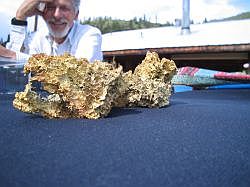
The gold mining claims we offer for sale are guaranteed to contain paying quantities of gold.
They have never been worked over by any clubs or worked in excess by any modern mining methods. They have never been mined by us beyond routine sampling and assessment work, always ensuring intact, uncompromised values. If it's quality you seek, contact us when you're ready to own a gold mining claim property.
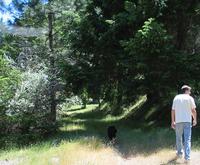
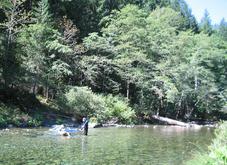
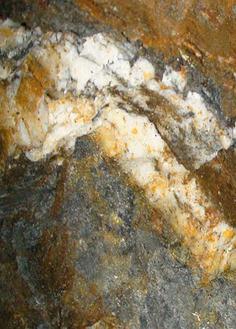
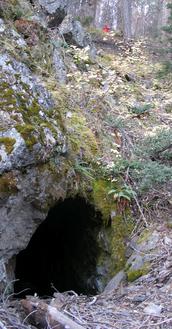
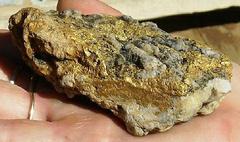
This Is Gold Country!
\




...the most trusted name in gold property listings.


est. 2003
The Claim Post

World-Class gold properties for sale